Imagine it’s rush hour when suddenly, a heavy downpour begins. Quick shifts in weather are common in Southeast Asia. Demand for rides surges, but Grab still manages to match passengers with drivers quickly, keeping waiting times reasonably short. Behind that smooth experience lies a lot of careful planning—made possible with one of the most powerful tools in our toolbox: forecasting.
Forecasting helps us predict what’s likely to happen in the future. Whether that’s how many rides will be requested in an area, how driver supply will shift with weather and time of day, or even how our systems might behave under different conditions.
Many industries rely on it: airlines forecast demand to optimise ticket prices, supermarkets forecast sales to manage inventory, and logistics companies forecast traffic to plan deliveries. At Grab, forecasting underpins everything from driver-partner incentives to ride pricing. As a Grab user or driver-partner, you’ve likely benefited from our enhanced forecasting models without being aware of how it works behind the scenes.
However, sophisticated forecasting is a complex task. Not every Grab team had the resources or expertise to set up forecasting pipelines from scratch. We needed a solution that simplified the process, while delivering high-quality results. This is what led to the development of Spyce.
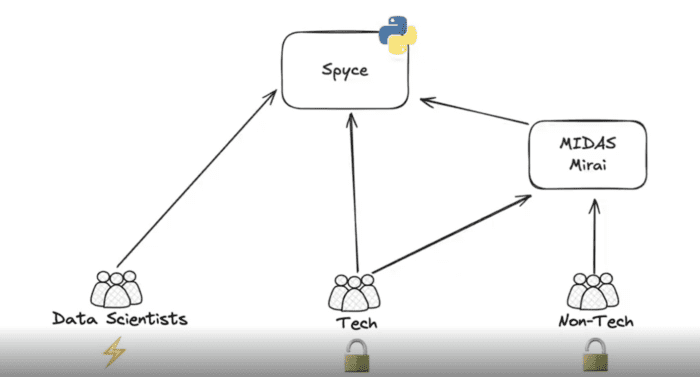
Spyce is an internal tool we created. It wraps multiple forecasting packages together, lowering the barrier to entry making advanced forecasting accessible to any team at Grab.
It came about as we were working on improving forecasting for a specific problem: Dynamic pricing. We were trying to understand how best to make subtle price adjustments to Grab rides—depending on the supply and demand situation— with the goal to balance out the marketplace for optimal service, considering real-time changes on the ground.
[Also read: Why and how do ride fares on Grab change with time?]
As we pooled our resources to solve this problem, we noticed a pattern. Actually, many forecasting tasks across Grab’s divisions and teams followed the same steps: gathering data, selecting the right forecasting models, defining metrics, and then evaluating performance.
With Spyce, we created a tool that accelerates the process of building a forecasting pipeline through automation. For example, it will automatically select the right model for the task, and works with the standardised metrics already available via other internal tools Grabbers use.
Non-technical users don’t have to install or write any code to work with Spyce. They can just send a request to forecast a given metric to an internal service and receive a result. This service will take care of all the work related to model selection and data preparation. The Spyce package can also easily integrate with AI agents (e.g. chat bots) that teams can then use to generate forecasts on their own.
In short, it helps any team get reliable forecasts faster, with less setup and guesswork. It reduces usual data-science work from weeks to hours, and allows teams to focus on the business problems and outcomes we’re trying to solve for, rather than spending time on setting up the forecasting models.
As for the name, Spyce is inspired by “the spice,” from the science fiction universe Dune. It’s a mysterious substance that helps those who ingest it gain foresight and heightened awareness.
Spyce started as a collaboration with the Fulfilment team, but thanks to support from the tech infrastructure team and others, it’s now expanding its reach across Grab. Any team can integrate Spyce into their workflows to build forecasts that guide smarter decisions.
Today, Spyce powers forecasting in a growing number of use cases across Grab, including:
Our next steps include enhancing Spyce’s automation, improving its scalability, and integrating it even more deeply across Grab’s systems.
At the end of the day, all this innovation serves one purpose: to make every Grab experience smoother, more reliable, and more delightful—whether you’re a driver-partner, a passenger, or someone waiting for their meal to arrive right on time.
3 Media Close,
Singapore 138498
GrabFood delivery-partner, Thailand
COVID-19 has dealt an unprecedented blow to the tourism industry, affecting the livelihoods of millions of workers. One of them was Komsan, an assistant chef in a luxury hotel based in the Srinakarin area.
As the number of tourists at the hotel plunged, he decided to sign up as a GrabFood delivery-partner to earn an alternative income. Soon after, the hotel ceased operations.
Komsan has viewed this change through an optimistic lens, calling it the perfect opportunity for him to embark on a fresh journey after his previous job. Aside from GrabFood deliveries, he now also picks up GrabExpress jobs. It can get tiring, having to shuttle between different locations, but Komsan finds it exciting. And mostly, he’s glad to get his income back on track.