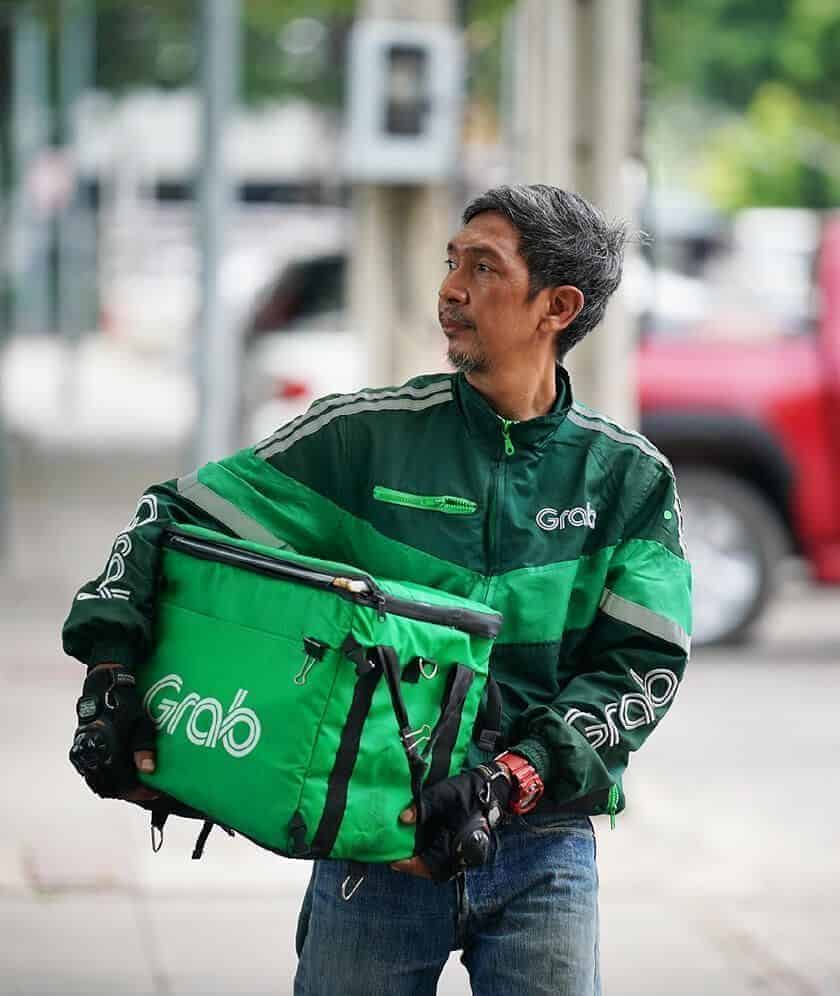
When global tech giants look at emerging markets, they often assume that a playbook built in cities like San Francisco or London can be scaled up across the globe. However, when it came to winning Southeast Asia’s ride-hailing market, it became obvious that global players did not hold the upper hand.
Grab’s Chief Financial Officer, Peter Oey, pulled back the curtain on how Grab’s hyper-local approach laid the groundwork for Southeast Asia’s leading superapp ecosystem in his interview for The Intrinsic Value Podcast.
How understanding local realities beats global scale
In 2013, Uber arrived in Southeast Asia with plenty of capital and a globally recognised brand. Going head-to-head with the company in the battle for market share was a turning point for Grab.
“In Southeast Asia at that time, credit card penetration was in the low single digits,” Oey explains. Whether in Jakarta, Manila, or Bangkok—people were primarily transacting in cash. Meanwhile, “you could only use an Uber with credit cards.“
So, one of Grab’s solutions to win in the region was to invest in building or partnering with local digital wallets in each of its operating markets. Grab doubled down on offering services tailored for the realities of everyday life in the region, which ultimately turned into its advantage.
Grab operates in 8 countries and 900 cities across Southeast Asia. It is a fragmented region of enormous diversity; a fabric of different cultures, regulatory regimes, and economic realities.
“If you think about Southeast Asia, there are over 700 million people, thousands of cities, thousands of languages spoken. We came in with a lens that required us to make our business hyper-local to every city.”
One way in which Grab continues to live this philosophy is through its approach to driver recruitment. In each city, “we set up driver centers, we had locals doing all the recruiting,” says Oey.
Understanding how to effectively work with local regulators also became a key advantage for Grab. Grab became a partner to local governments by collaborating to solve the same problems, “whether that’s transportation in those cities, or food quality,” says Oey.
These early investments into localized digital infrastructure, relationships with local governments, and recruiting local talent, laid the foundations for what is now Grab’s superapp ecosystem, spanning financial services, rides, food, grocery, and more, across Southeast Asia.
Data: the motor of Grab’s fintech business
The range diversity of its services and scale of its user base today gives Grab a unique vantage point when it comes to understanding consumer behaviour in Southeast Asia. Grab processes some 10 million transactions a day.
“What is unique about a superapp is the ability to collect data points,” Oey explains. “If you know someone is taking a ride to a restaurant or ordering a meal, you get a data point. This tells you, for example, whether they like street food, or upmarket food. This data point allows you to try to upsell this person. Or you could try to nudge them toward a Thai food delivery because they just went to a Thai restaurant.”
What’s more, Grab’s ecosystem data insights extend beyond consumer behaviour. From a driver’s daily earnings and their efficiency on the road, to a merchant’s real-time sales, this trove of data unlocks a range of opportunities for Grab, for instance, offering tailor-made loans.
Many driver- and merchant partners are unable to secure loans from traditional banking institutions because they lack a formal credit history. But Grab built proprietary AI and machine learning credit scoring models that harness user data to gauge their ability to repay loans, lowering the credit risk for Grab.