At Grab, our mission to drive Southeast Asia forward also requires us to think deeply about sustainability.
One of the solutions we’ve implemented is the Green Programme, a feature within the Grab app for mobility and delivery users. Leveraging the vast reach of our digital platform, we empower millions of Grab users to make voluntary, fractionalized contributions with each of their rides or deliveries. By channeling these contributions to trusted environmental partners, together, we’re supporting crucial work in biodiversity conservation and carbon reduction across the region.
[Also read: Now you can support more green projects through the Grab app]
While our Green Programme has contributed to reforestation, environmental community based projects, and sustainable technologies —on land—we recognize that operating in a region defined by its waters means our responsibility must also consider the oceans.
That’s why we’ve begun supporting impactful marine ecosystem restoration projects, letting the Green Programme take on a shade of blue. It’s a reflection of our deep commitment to the oceans that are vital to the region’s economy and resilience.
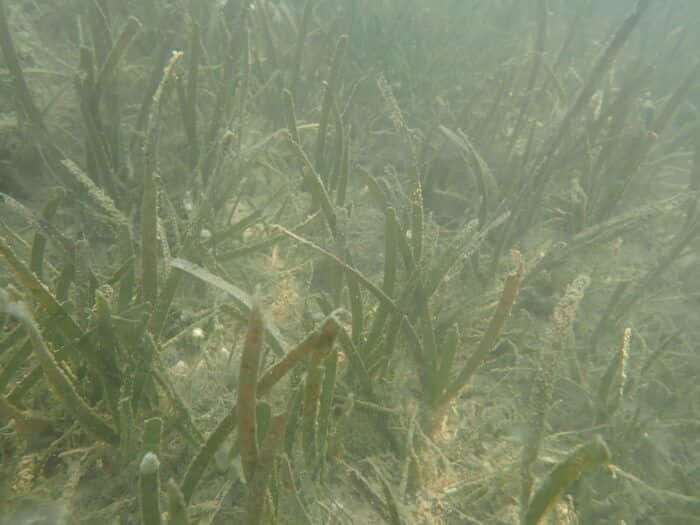
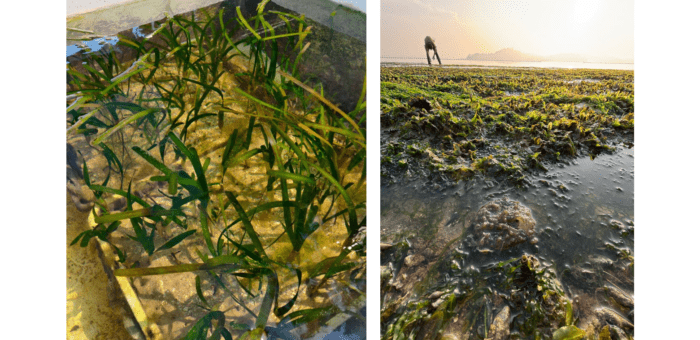
We want to spotlight an essential Blue Carbon initiative that our community has been supporting: the “Seagrass Nursery Development Project”, led by the National University of Singapore’s Tropical Marine Science Institute (NUS-TMSI). In partnership with the WWF-Singapore, we are contributing to set up Singapore’s first ever large scale seagrass nursery right at St. John’s Island National Marine Lab to support seagrass restoration initiatives.
While we often hear about the importance of rainforests, seagrass meadows are, acre-for-acre, one of the planet’s most efficient natural carbon sinks. Seagrass sequesters carbon 35 times more than tropical rainforests and stores approximately 10% of the carbon buried in ocean sediment annually.
Beyond carbon, seagrass forms an essential habitat for countless marine species. This directly translates to regional food security and the protection of marine wildlife like dugongs, sea turtles and seahorses
Unfortunately, seagrass ecosystems are highly vulnerable. Almost 30% have been lost globally since the 1930s, with annual global loss accelerating in recent decades, currently standing at around 7%. This decline is partly caused by coastal development and pollution.
There is an urgent need for dedicated seagrass nurseries to supply large-scale replanting efforts in Southeast Asia. However, little is known about how to effectively farm seagrass. Discovering how to do this, is exactly what this project aims to do.
The strategy here is not just about short-term action; it’s about building a scalable and replicable framework for seagrass conservation and restoration in Southeast Asia. The establishment of the seagrass nursery is intended to serve as an educational hub and a stepping stone to scale up the seagrass restoration projects in the region. This will be done in collaboration with research institutions and scientists to build up capacity and share knowledge. In the initial three-year project phase, expected outcomes are:
This collective effort, which is also supported by our consumers in Singapore, embodies a strategic approach to sustainability—investing in the research and development necessary to tackle complex environmental challenges effectively.
We are grateful to every user whose contribution powers this vital work, extending our mission from the app and the roads to the health of the oceans. We look forward to sharing more updates on the progress of this initiative in the years ahead.
3 Media Close,
Singapore 138498
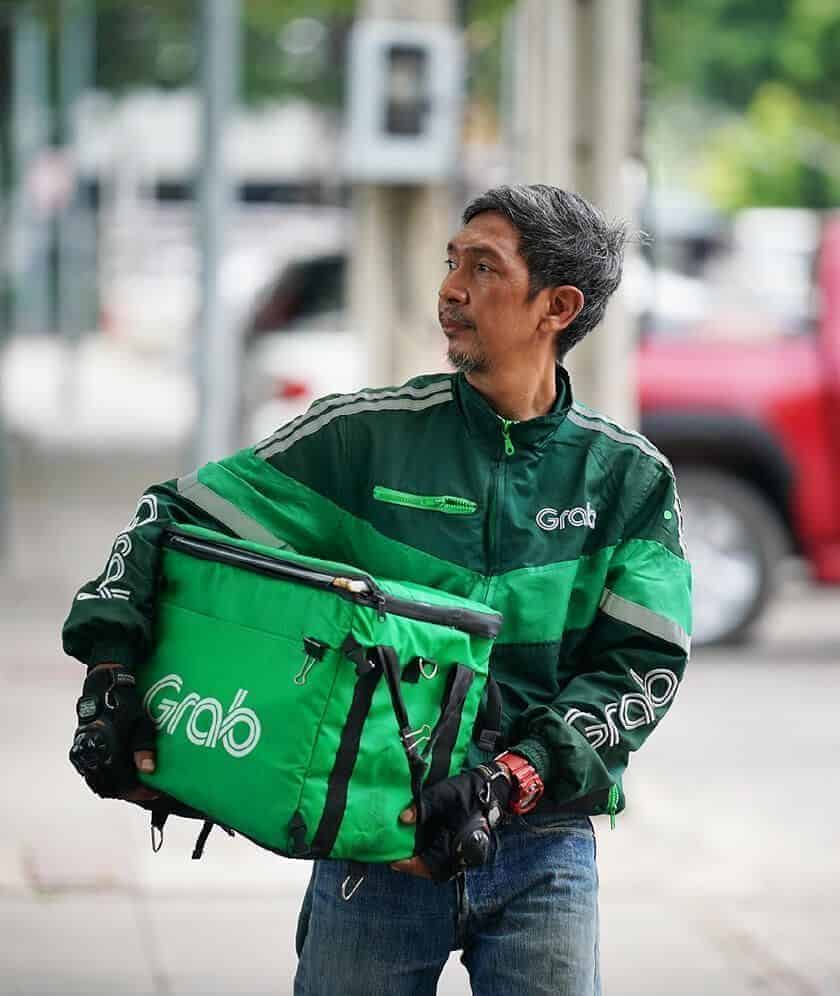
GrabFood delivery-partner, Thailand
COVID-19 has dealt an unprecedented blow to the tourism industry, affecting the livelihoods of millions of workers. One of them was Komsan, an assistant chef in a luxury hotel based in the Srinakarin area.
As the number of tourists at the hotel plunged, he decided to sign up as a GrabFood delivery-partner to earn an alternative income. Soon after, the hotel ceased operations.
Komsan has viewed this change through an optimistic lens, calling it the perfect opportunity for him to embark on a fresh journey after his previous job. Aside from GrabFood deliveries, he now also picks up GrabExpress jobs. It can get tiring, having to shuttle between different locations, but Komsan finds it exciting. And mostly, he’s glad to get his income back on track.