Imagine this: you’re craving durian, the famously pungent and beloved fruit of Southeast Asia. Not just any durian, but the freshest available, at the best price, right now. You open a digital map, type in your request, and the map tells you exactly which store has it. It gives you directions and off you go. No browsing needed, no time wasted.
We may not yet have every durian stall accounted for, but we’re getting there. According to Grab’s Chief Product Officer, Philipp Kandal, it’s these types of problems he’s most excited to solve.
In a recent interview for What’s Your Problem—the podcast of former Planet Money co-host Jacob Goldstein—Philipp shared a vision for maps that go beyond navigation, with real-time, hyperlocal insights about Southeast Asia.
He dove into how Grab creates GrabMaps, its own, hyperlocal map for a fast-changing region where winding alleys, dense neighbourhoods, and motorbike-centric traffic demand a radically different approach to mapping.
Listen to the full conversation here.
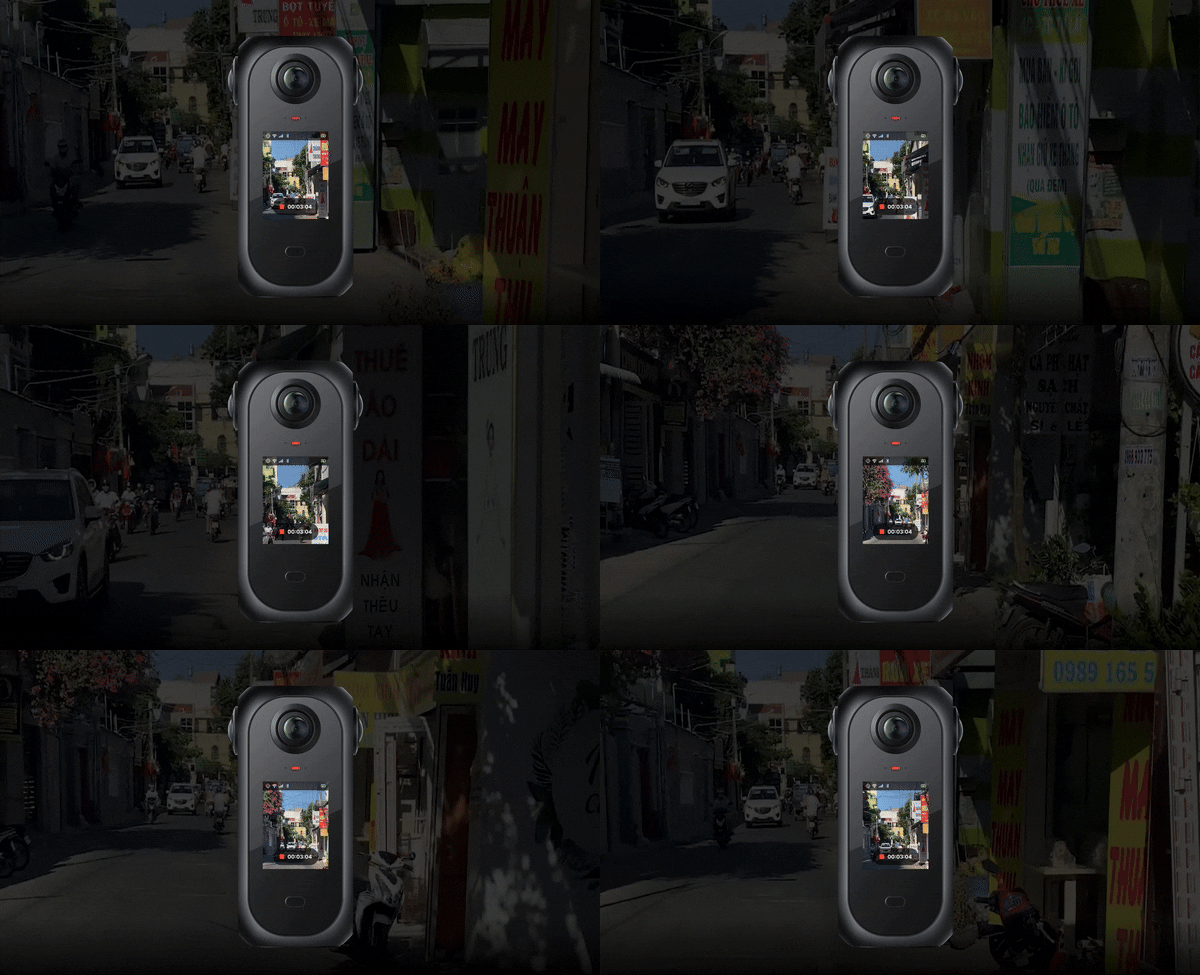
Instead of relying on expensive mapping vans, Grab developed lightweight, inexpensive AI-powered cameras priced in the hundreds of dollars. These versatile cameras are mounted on motorbikes, cars, and even backpacks, allowing Grab to gather more precise mapping data. Previously unmapped parts of Southeast Asia—the narrow alleyways, the insides of shopping malls, the dirt paths, you name it—could now be accounted for by GrabMaps.
Watch: Our KartaCam 2 in action
Our drivers were already crisscrossing Southeast Asia’s cities hundreds of times a day, explained Philipp, adding that equipping our fleet with cameras allowed us to collect mapping data at a fraction of the cost of doing this with a specialised fleet. By the end of 2025, Grab will have about 20,000 cameras deployed across Southeast Asia, capturing real-time data that traditional mapping companies and third-party mapping providers would typically struggle to match.3 Media Close,
Singapore 138498
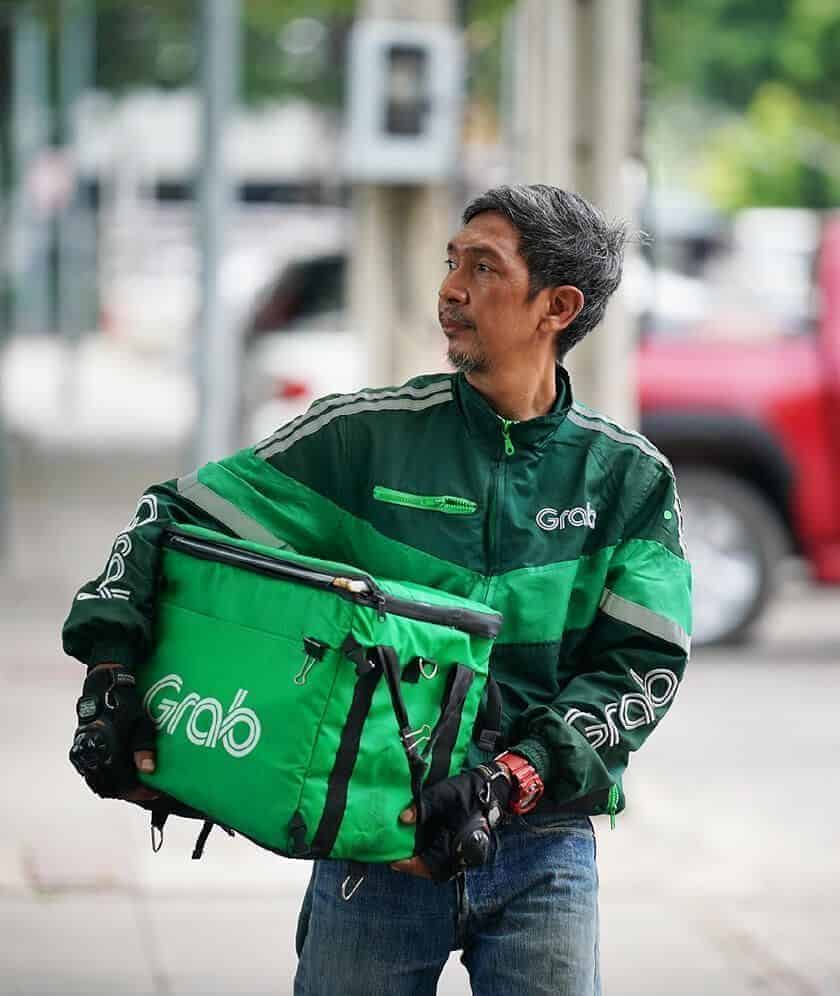
GrabFood delivery-partner, Thailand
COVID-19 has dealt an unprecedented blow to the tourism industry, affecting the livelihoods of millions of workers. One of them was Komsan, an assistant chef in a luxury hotel based in the Srinakarin area.
As the number of tourists at the hotel plunged, he decided to sign up as a GrabFood delivery-partner to earn an alternative income. Soon after, the hotel ceased operations.
Komsan has viewed this change through an optimistic lens, calling it the perfect opportunity for him to embark on a fresh journey after his previous job. Aside from GrabFood deliveries, he now also picks up GrabExpress jobs. It can get tiring, having to shuttle between different locations, but Komsan finds it exciting. And mostly, he’s glad to get his income back on track.