When Grab CEO Anthony Tan sits down for a chat with Group Head of Marketing, Sustainability, Loyalty & Support, Cheryl Goh, it feels less “boardroom” and more “family dinner.”
They’ve worked alongside each other for 13 years, from the scrappy startup days in a tiny storeroom office in Malaysia, to the high pressure of the Grab public listing on NASDAQ.
In this first episode of the Inside Grab podcast, Anthony shares the raw stories of Grab’s beginnings. It’s a look at the “Hokkien heritage” that shaped his view of money, how he convinced early investors of their ability to execute a bold vision, and how they orchestrated Grab’s listing in New York City all the way from Singapore.
"Ideas are a dime a dozen. Investors don't just look at the model; they look at whether the founding team has the tenacity to grind it out for the long run."
Anthony Tan
Inside the episode, Anthony explains “Jiak Kor”, the Hokkien mindset of “eating bitter” which he grew up with. It means the ability to take pain and grind through the hardest years of a startup. [02:53]
He reveals the early difficulties of getting investors to believe in Grab’s potential, and how Grab’s board of directors evolved over time. He recalls a high-tension board debate where a crucial decision on driver supply passed by just one vote—saving the company from a potential collapse. [28:00]
Anthony’s perspective never changed, even when Grab was out of its early fundraising stage and on its way to a public listing. “Investor money is the public’s money”. The mindset helps Anthony gain clarity on spending decisions and is one of the guiding principles for sharing Grab’s thought processes. [34:39]
Whether you’re a Grabber, a budding entrepreneur, or just someone who loves a good underdog story, this episode is a lesson in stewardship and tenacity.
You can find the Inside Grab Podcast on:
➡️ Spotify
➡️ YouTube
3 Media Close,
Singapore 138498
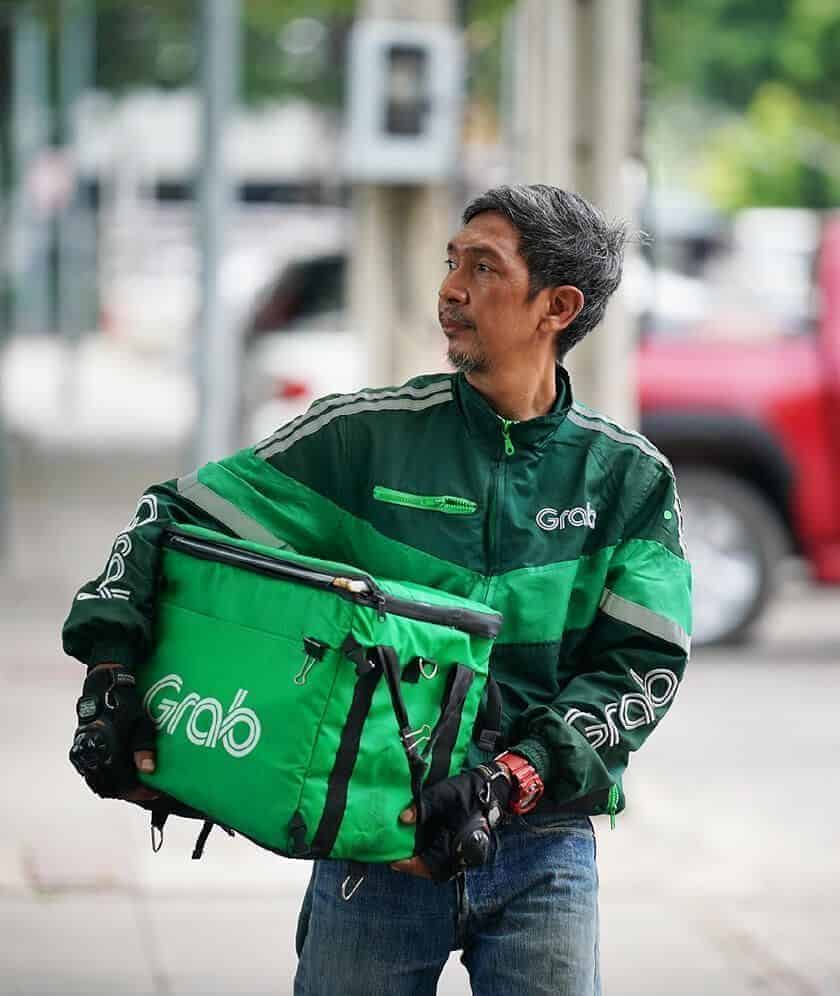
GrabFood delivery-partner, Thailand
COVID-19 has dealt an unprecedented blow to the tourism industry, affecting the livelihoods of millions of workers. One of them was Komsan, an assistant chef in a luxury hotel based in the Srinakarin area.
As the number of tourists at the hotel plunged, he decided to sign up as a GrabFood delivery-partner to earn an alternative income. Soon after, the hotel ceased operations.
Komsan has viewed this change through an optimistic lens, calling it the perfect opportunity for him to embark on a fresh journey after his previous job. Aside from GrabFood deliveries, he now also picks up GrabExpress jobs. It can get tiring, having to shuttle between different locations, but Komsan finds it exciting. And mostly, he’s glad to get his income back on track.