Everyone at Grab is encouraged to identify real-world problems, invent new solutions and pursue patent protection for genuinely novel ideas. Supported by the Grab Patent Office (GPO), established in 2019, this culture of innovation has helped Grab build one of the largest patent portfolios among its Southeast Asian peers.

In 2026, Grab was named to IAM’s Asia IP Elite list for the fifth consecutive year. IAM is a global market intelligence platform focused on intellectual property (IP). This recognition places Grab among a small group of Southeast Asian organisations with an international reputation for their contributions to IP.

Grab’s innovation trend: designing experiences

What we’re observing at Grab—as we look back on several years of tracking this data—is a rise in the number of patent applications in the experiences category.

Compared to when we started, we’ve doubled the number of patent applications in the group of innovations that directly impact the way our consumers, driver- and merchant-partners interact with the app.

This trend reflects our focus on solving the everyday challenges drivers, merchants and passengers encounter when using Grab—not just improving the technology behind the scenes. At the same time, we continue to file applications in other categories that power the platform’s infrastructure, including navigation, security and allocation technologies.

How we create IP for Southeast Asia

Creating innovative user experiences that solve real-world challenges starts with on-the-ground research. Grab’s teams build a detailed understanding of local contexts through activities such as immersions: shadowing delivery-partners as they go about their day, observing merchant workflows and conducting in-depth interviews with consumers.

Southeast Asia’s cities, roads, businesses and connectivity environments are particularly diverse. Driver-partners may need to navigate dense, chaotic urban areas, while merchants often operate busy kitchens in small spaces with limited time and resources.

The understanding we’ve gained about everyday operational challenges across Southeast Asia’s varied cultures, languages and environments drives Grab’s innovations today.

Here are three examples of recent inventions moving through Grab’s patent process.

Merchant AI Assistant (MAI)

Gives merchants a personal business assistant

Grab’s Merchant AI Assistant (MAI) is one such solution. We understood the constant stream of questions that arise for merchants as they run their businesses on Grab. Which menu items are performing well? How are sales trending? Are all menu items actually available today? Is a promotion working?

Grab’s LLM-Powered Adaptive Assistant Architecture is designed to give merchants personalised support with these everyday challenges, 24/7. More than a chatbot that waits for merchants to ask questions, MAI proactively makes suggestions.

It can analyse a merchant’s business performance, provide insights and recommend practical next steps. Merchants review and confirm suggested actions before they are carried out. This gives them more control while reducing the need to move between different tools and systems.

This unique architecture, which enables MAI to tailor advice to each merchant, has been granted a patent in Singapore, with applications pending in Thailand, Indonesia, Malaysia, the United States and China.

By making business support more accessible and relevant in the local languages spoken across Grab’s markets, MAI is a tool in merchants’ hands that helps them spend less time navigating technology and more time growing their businesses on Grab.

Grab RideGuide Smart Destination

Helps driver-partners find better places to wait

RideGuide is a feature within the Grab Driver app that helps driver-partners identify and navigate to busy areas where there may be more opportunities to get bookings and earn more.

RideGuide already uses Grab’s maps and marketplace insights to guide drivers towards these high-demand areas. The Smart Destination invention, currently in its patent application process, makes that experience more useful.

It identifies a practical waiting spot within the wider zone—not simply sending a driver to an arbitrary point on the map. Because the streets of Southeast Asian cities can be crowded and chaotic, it’s not always easy for driver-partners to find somewhere suitable to wait.

This means each driver-partner can rely on the app and be guided more seamlessly between bookings, avoid overcrowded areas and spend less time driving around. The result is a more efficient marketplace and better opportunities for drivers to stay productive.

Cloud Printer

Making busy kitchens easier to manage

In fast-moving, small kitchens, staff may be handling food, coordinating orders and preparing deliveries at the same time. Reaching for a tablet or phone to accept an order or mark it as ready is not always practical—and it can slow things down.

Grab Cloud Printer addresses this challenge by turning the traditional order printer into a more intelligent, voice-enabled tool. Merchants can use voice commands to manage parts of the order workflow without constantly touching a screen. The design and user experience of the device is simple, specifically designed to require the least possible interactions from users on its screen.

The printer uses local voice detection to respond when it hears its wake word, rather than continuously streaming audio to the cloud. This helps reduce latency, limit unnecessary data transmission and make the technology more suitable for busy kitchen environments.

By letting merchants manage order steps with their voice, with minimal screen interactions, Cloud Printer brings Grab’s technology into the flow of kitchen work—helping keep orders moving with fewer interruptions for merchants, delivery-partners and customers. 

Innovation is part of Grab’s culture

For Grab, patents are not just legal documents or numbers on a leaderboard. They’re one way to recognise teams that take the time to solve difficult local problems in new ways.

The GPO helps teams identify potentially patentable ideas and navigate the application process. Innovation can come from many places, including day-to-day product work, research and company-wide events such as Grab’s annual hackathon.

(Also read: Grab’s patent-friendly environment is a catalyst for innovation)

Together, these examples show how locally informed innovation can make everyday interactions with Grab more useful—helping merchants keep orders moving and driver-partners make better use of their time on the road

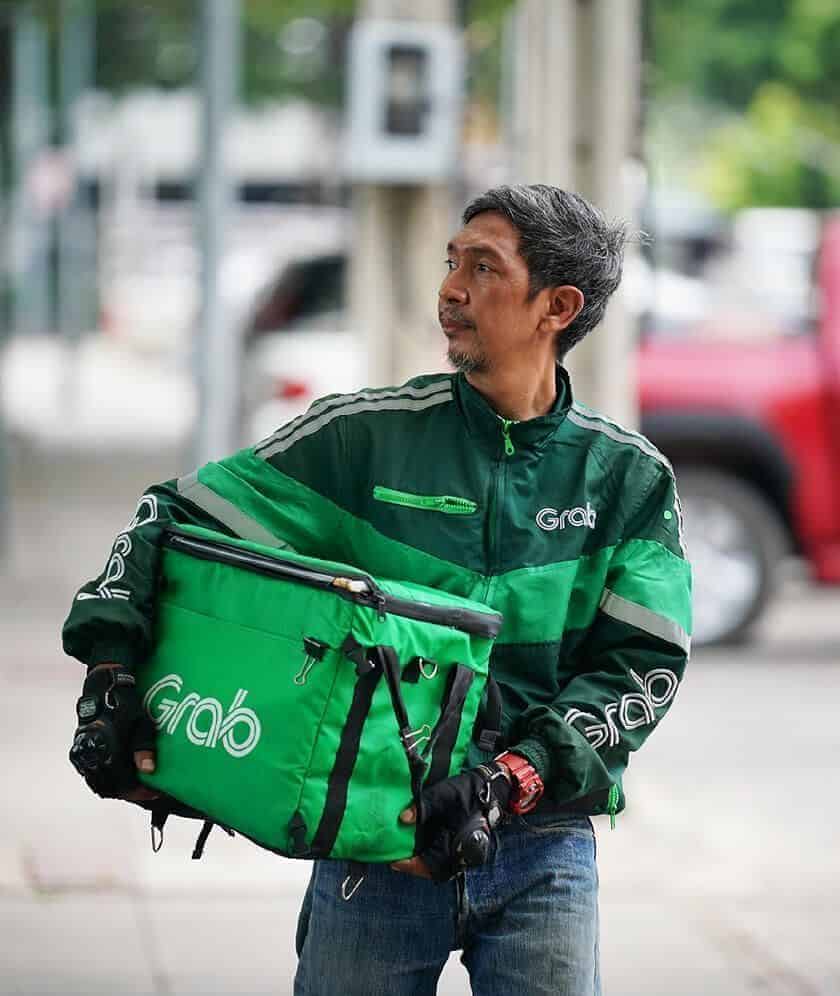
Komsan Chiyadis

GrabFood delivery-partner, Thailand

Komsan Chiyadis

GrabFood delivery-partner, Thailand

COVID-19 has dealt an unprecedented blow to the tourism industry, affecting the livelihoods of millions of workers. One of them was Komsan, an assistant chef in a luxury hotel based in the Srinakarin area.

As the number of tourists at the hotel plunged, he decided to sign up as a GrabFood delivery-partner to earn an alternative income. Soon after, the hotel ceased operations.

Komsan has viewed this change through an optimistic lens, calling it the perfect opportunity for him to embark on a fresh journey after his previous job. Aside from GrabFood deliveries, he now also picks up GrabExpress jobs. It can get tiring, having to shuttle between different locations, but Komsan finds it exciting. And mostly, he’s glad to get his income back on track.