Autonomous robots are becoming an increasingly familiar part of urban life. At Grab, we’re exploring how they can work alongside delivery-partners to make deliveries more efficient, more reliable and better for the people who rely on them every day.

To see what that looks like in practice, you don’t have to look any further than the lobby of Grab HQ Singapore, where an autonomous delivery robot named Carri is hard at work.

How the food delivery robot works at Grab HQ

When a delivery-partner arrives at Grab HQ, they simply place the order inside Carri’s secure hatch. Instead of entering the building to locate the recipient and complete the handover themselves, Carri takes over the final leg of the delivery.

From there, Carri autonomously navigates Grab HQ’s lobbies, corridors and elevators before meeting Grabbers near their desks. Once she arrives, Grabbers unlock the hatch using a unique code to collect their meal.

Continuous learning behind the scenes

Behind what looks like a simple delivery is a lot of learning. Grab HQ provides the ideal environment for Carri to learn. While it’s a controlled space, it also presents many of the real-world challenges an autonomous delivery robot needs to navigate—from busy lift lobbies and crowded corridors to unpredictable human movement. With our engineering, facilities and business teams close by, we can observe, iterate and improve quickly.

Solving for food delivery’s first and last mile

Delivery robots aren’t about replacing human delivery-partners. They are about helping with some of the most time-consuming parts of every delivery. 

While 7 in 10 food deliveries cover a distance of over two kilometers, the biggest source of friction isn’t always the ride itself. It’s often the start and the finish of an order: finding parking, waiting at a busy restaurant, navigating confusing apartment complexes or office buildings, and riding elevators to complete the handover.

By deploying robots to support these specific, time-consuming parts of the journey in key locations, we can improve the delivery experience for everyone involved:

  • For delivery-partners: Less time spent navigating buildings means they can complete more deliveries and potentially improve their earnings.
  • For consumers: Faster and more predictable deliveries.
What’s next for Carri

Carri is already completing deliveries around Grab HQ. Our focus now is on helping her solve the ‘long-tail problems’— rare, unexpected situations that inevitably arise when a robot operates autonomously in the real world.

Because safety is our top priority, we are taking the time to ensure Carri can respond safely and reliably before expanding beyond Grab HQ.

The next step is to take those learnings into the real world.  We’ll continue testing autonomous delivery robots beyond Grab HQ, giving us the opportunity to learn how they perform in more complex, real-world environments.

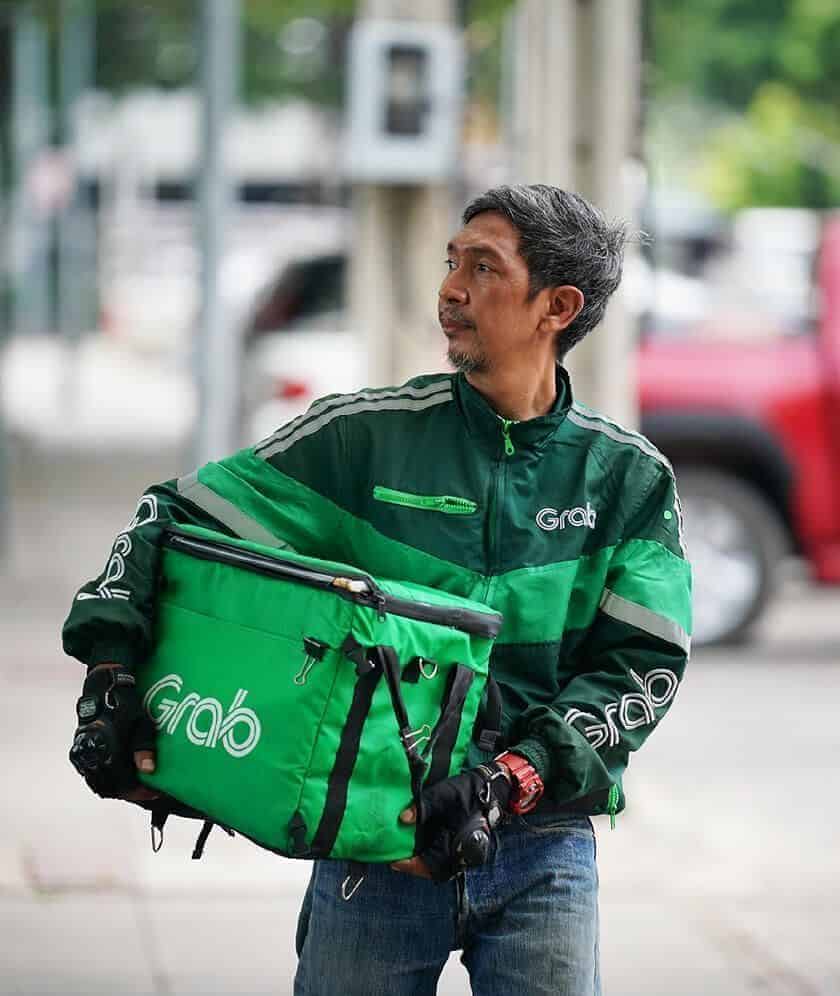
Komsan Chiyadis

GrabFood delivery-partner, Thailand

Komsan Chiyadis

GrabFood delivery-partner, Thailand

COVID-19 has dealt an unprecedented blow to the tourism industry, affecting the livelihoods of millions of workers. One of them was Komsan, an assistant chef in a luxury hotel based in the Srinakarin area.

As the number of tourists at the hotel plunged, he decided to sign up as a GrabFood delivery-partner to earn an alternative income. Soon after, the hotel ceased operations.

Komsan has viewed this change through an optimistic lens, calling it the perfect opportunity for him to embark on a fresh journey after his previous job. Aside from GrabFood deliveries, he now also picks up GrabExpress jobs. It can get tiring, having to shuttle between different locations, but Komsan finds it exciting. And mostly, he’s glad to get his income back on track.