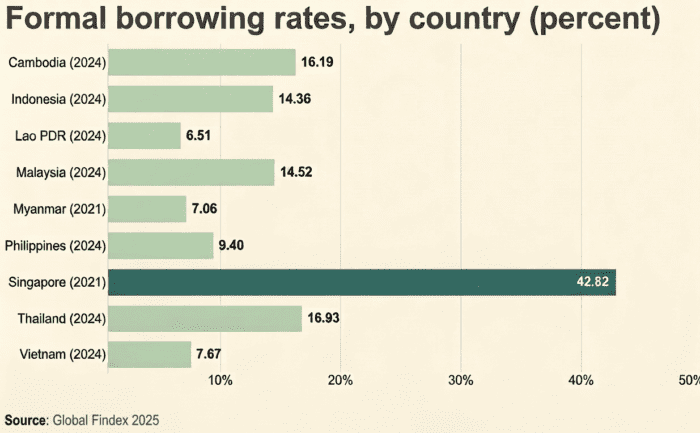
Access to traditional bank loans remains out of reach for millions across Southeast Asia.
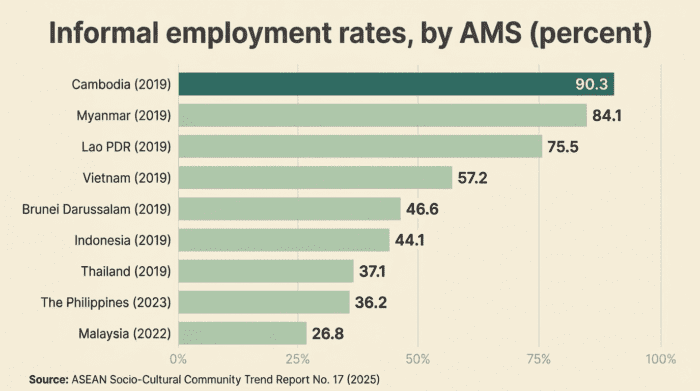
Despite the region’s rapid economic growth, most people still earn their living in the informal sector—working as day laborers, freelancers, gig workers, or small business owners. Because they lack formal payslips or credit histories, traditional banks often view them as too risky to lend to.
When additional expenses arise—a medical emergency, a vehicle repair, a shop expansion, upgrading to an EV—many are forced to turn to unregulated lenders.
Grab is in a unique position to help change this.
Through millions of micro transactions across our ecosystem, we have a view of the informal economy that traditional banks simply don’t see. We understand a driver’s daily earning capacity, a merchant’s weekly cash flow, and a consumer’s spending patterns.
By using this data responsibly, Grab Financial Services—including GrabFin, OVO, GXS Bank, GXBank, and Superbank—can assess creditworthiness allowing us to deliver liquidity directly to help meet users’ needs.
Impact proofpoint:
Source: Financial inclusion through lending based on platform work. Ipsos and Grab (2025), Impact Assessment of Grab’s Lending Products for Driver-Partners
As we scale financial services across Southeast Asia, we recognise that expanding access to credit brings responsibility. Here are the five core principles that guide our approach to responsible lending.
We build financial products that seek to serve those who are often excluded by traditional banks, or new to formal credit, across Southeast Asia. That could include gig workers, micro-entrepreneurs, and consumers with limited credit history.
Our products and services are distributed through digital channels to meet users’ everyday financing needs.
Our commitment to fostering responsible lending means that we embed rigorous guardrails into every stage of our lending process:
Every borrower should understand what they will pay, when they will pay it and what happens if they cannot pay—before deciding if they should accept a credit product. We design our credit products to be easy to understand, with fee clarity and without fine-print traps. This includes providing borrowers with information about:
We also maintain a commitment to interface design that supports transparent communication:
We collect and analyze customer feedback, complaints, term comprehension and indicators of financial stress to identify where our disclosures or product journeys can be improved.
We understand that unexpected events happen that can make loan repayment difficult. We believe that temporary hardship should be met with access to structured support and clear, fair procedures.
When accounts fall into default we strive to enforce fair recovery policies:
We seek to build trust by adhering to local regulations and operating with integrity across every country where we offer financial services.
Providing credit is only the first step toward true financial inclusion. Our ultimate goal is to help borrowers build lasting financial health—enabling them to establish credit histories that open doors both within and beyond the Grab ecosystem.
By combining accessible credit, formal recognition, and practical education, we ensure that borrowing with Grab serves as a springboard toward long-term independence and financial resilience.
3 Media Close,
Singapore 138498
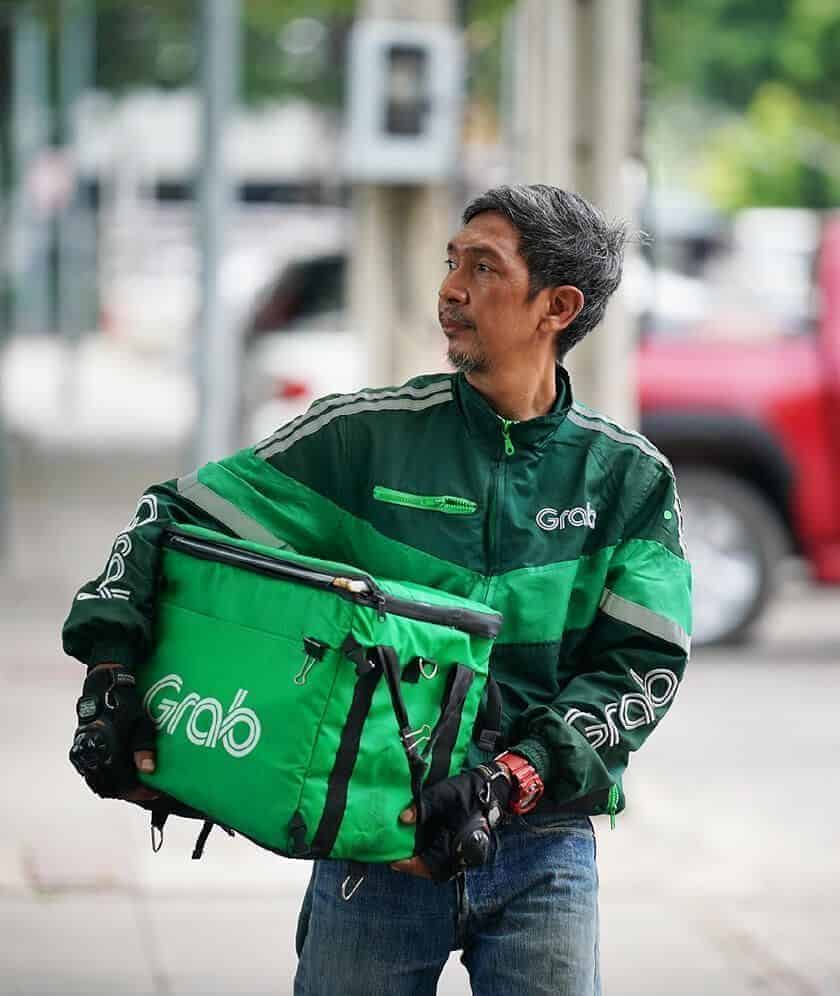
GrabFood delivery-partner, Thailand
COVID-19 has dealt an unprecedented blow to the tourism industry, affecting the livelihoods of millions of workers. One of them was Komsan, an assistant chef in a luxury hotel based in the Srinakarin area.
As the number of tourists at the hotel plunged, he decided to sign up as a GrabFood delivery-partner to earn an alternative income. Soon after, the hotel ceased operations.
Komsan has viewed this change through an optimistic lens, calling it the perfect opportunity for him to embark on a fresh journey after his previous job. Aside from GrabFood deliveries, he now also picks up GrabExpress jobs. It can get tiring, having to shuttle between different locations, but Komsan finds it exciting. And mostly, he’s glad to get his income back on track.