中文版
Yee Wee Tang, Group Managing Director of Operations at Grab, issued the following statement in response to recent public discussions regarding Grab’s proposed acquisition of foodpanda Taiwan:
Since announcing our proposed acquisition of foodpanda Taiwan, Grab has focused our efforts on getting to know Taiwan, listening closely to voices across society, and taking concrete action to support the local community.
Foodpanda’s parent company has made a corporate decision to exit Taiwan. We believe the question before regulators is whether Taiwan ends up with one platform or two platforms that can compete effectively with each other.
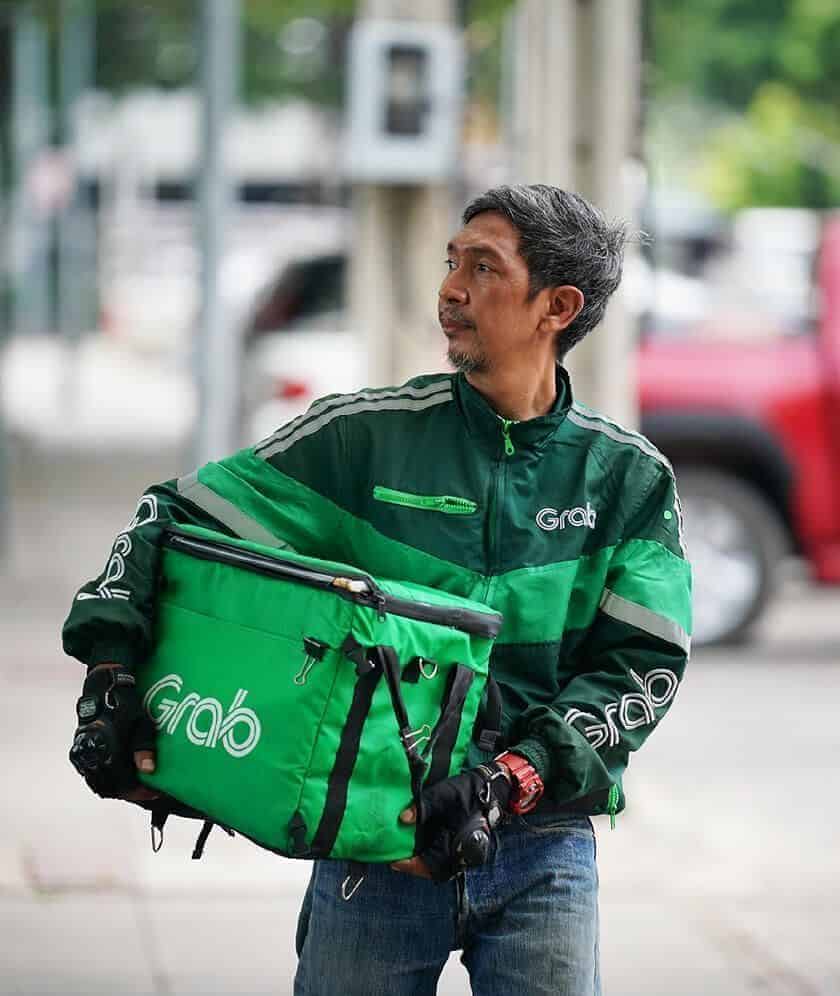
We are deeply mindful of what this decision means for the people of Taiwan – the merchants who built their businesses on digital platforms, the riders who depend on every order for their livelihoods, and the consumers who rely on food delivery as part of daily life.
To ensure continuity for local communities, over the past several months, we have engaged with government authorities, elected representatives, delivery partner unions, merchants and industry associations, as well as many consumers, delivery partners and local businesses. Many stakeholders believe that Grab’s investment into Taiwan will introduce genuine choice and contribute to economic growth. We are also grateful for the support of the chain store associations and 18 labor unions who believe our technology will provide better earnings opportunities and protections to both delivery riders and merchants.
What we heard from them was very clear: delivery partners want more choices and sustainable earning opportunities, while merchants want more than orders — they want opportunities to grow, transform digitally and reach new markets. They also want a smooth transition that ensures delivery riders and merchants can continue earning livelihoods without disruption. These conversations have helped shape how we think about the role Grab can play in Taiwan.
Hence we are not waiting for deal approval to show our commitment. While we await the outcome of the review and have not yet formally entered the market, we are already working to deliver tangible results for the local community.
- For delivery partners, Grab has made concrete commitments to safeguard delivery partner livelihoods through smooth transition plans, earning protections, and will continue engaging with legitimate unions on the issues that matter to riders.
- For merchants, we are already supporting 5 Taiwanese brands under the GrabAtlas programme to help them expand into Southeast Asia, including one brand that uses 100% Taiwan-sourced milk and fruits, hence supporting the Taiwan agricultural sector. We will also provide AI tools to small businesses.
We recognize that any new international company seeking to enter Taiwan will invite public attention and scrutiny. This is why, over the past several months, we have engaged with multiple stakeholders to listen to different views, and do our best to address questions regarding market competition, delivery partner rights and interests, merchant development, data security and corporate governance.
However, while we have repeatedly clarified our position, deliberate misinformation continues to be circulated and we would like to reiterate the fundamental facts about our corporate structure, independence and data security:
1. Grab is a new market entrant to Taiwan that can bring meaningful competition and new capabilities to Taiwan. Grab’s entry is fundamentally different from transactions that merge existing players into a single dominant platform. Grab is an independent operator brand-new to Taiwan, and if the acquisition is approved, there will be two strong players actively competing for users. Grab would bring the scale, technology and investment capacity needed to compete effectively over the long term. Grab operates across Southeast Asia and has built capabilities in AI, mapping, logistics, payments and merchant solutions. We hope to bring these capabilities to Taiwan to drive service innovation, create more choices for consumers and delivery partners, help merchants accelerate their digital transformation, and connect Taiwanese businesses with growth opportunities across Southeast Asia.
2. Grab is an independent, publicly listed company headquartered in Singapore. All decisions are made by Grab’s leadership and disclosures are filed publicly with the U.S. SEC. Grab and Uber are two separate companies that operate independently of each other. Uber’s non-controlling <4% voting stake stems from Uber’s 2018 sale of its Southeast Asia business to Grab, and carries zero operational control and zero influence. The Uber representative also stepped down from Grab’s Board of Directors in July this year. If given the opportunity to enter Taiwan, Grab will compete on its own merits. We will earn the trust and business of consumers, delivery partners and merchants through our own technology, service and investment, just as we have done across Southeast Asia.
3. Grab’s institutional shareholder base is global and the majority of Grab’s stock ownership is held by institutional funds based in the United States, Japan, the United Kingdom, and Singapore. To our knowledge, DiDi Global invested in Grab alongside SoftBank in 2017, currently owns less than 0.25% as of June 2026, representing <0.1% voting power. Other than Didi, the total combined equity held by institutional investors that are domiciled or maintain regional branches in China (including Hong Kong) is below 2.8%, representing less than 0.8% voting power. Like many companies listed in global capital markets, Grab has a diverse and global shareholder base, with institutional investors from different countries and regions. Share ownership does not equate to control over a company; corporate governance and decision-making authority are key to determining a company’s independence. Under Grab’s dual-class share structure, our CEO, Anthony Tan, a Singaporean citizen, maintains >70% of voting rights.
4. Data security is non-negotiable and Grab will comply with Taiwan’s regulations. We will best protect Taiwan users‘ data through clear and robust safeguards. All Taiwan data will be stored in Taiwan and Singapore, with strict access-rights management and audit tracking. In no circumstances will Taiwan data be stored in mainland China, Hong Kong or Macau. We will have a Taiwan-specific Technology Governance Committee to ensure compliance with Taiwan’s Personal Data Protection Act and all applicable Taiwanese legal requirements.
5. Grab has engaged with independent Taiwan-based experts to review its practices for compliance and strengthen accountability. The Amazon Web Services (AWS) Security Assurance Services (SAS), a Qualified Security Assessor Company (QSAC), conducted a gap assessment of Grab’s proposed Taiwan architecture and a selection of its security controls using the SOC 2 framework and selected ISO 27001 controls. Based on the scope of the assessment, SAS did not identify design gaps in the reviewed security controls.
6. Any suggestion that Taiwan user or map data would be accessible through a Huawei mapping partnership is false. From day 1 of Taiwan operations, we will use Grab’s own proprietary maps. Grab’s partnership with Huawei Petal Maps is strictly limited to 8 Southeast Asian markets and does not involve any user data. Taiwan is not part of this agreement, and it is contractually and technically impossible for Huawei to access any Taiwan map data under the Grab partnership. No Taiwan data will be shared with Chinese map providers or China-based partners (including Huawei).
We place full confidence in Taiwan’s regulatory bodies to conduct a rigorous, fact-based, and objective assessment. Until the outcome is announced, Grab will continue to focus on building trust through concrete action and serving as a constructive partner to grow Taiwan’s food delivery industry. If given the opportunity to enter Taiwan, we are committed to contributing to what truly matters to local communities: robust market competition, greater choice for consumers, technological progress, and more earning opportunities for riders and merchants. We believe in Taiwan’s potential and are ready to be a long-term partner in its digital economy and future growth.