UN Global Compact Network Singapore, Kantar and Grab Launch Landmark Study on the Potential for Economic Development of Women in Southeast Asia through Platform Work
- USD 0.8 billion in economic output was generated by Grab women driver-partners across Southeast Asia in 2025.
- 59% of women driver-partners cite lack of flexibility as their main motivation in joining platform work as traditional models of work cannot address their time poverty
- The digital economy drives economic inclusion by decoupling income from fixed schedules; 86% of women partners report increased financial independence and 80% a higher quality of life.
- By redesigning systems and expanding flexible platform work, the region can create a more inclusive future of work and unlock millions in economic output as women reclaim their economic independence
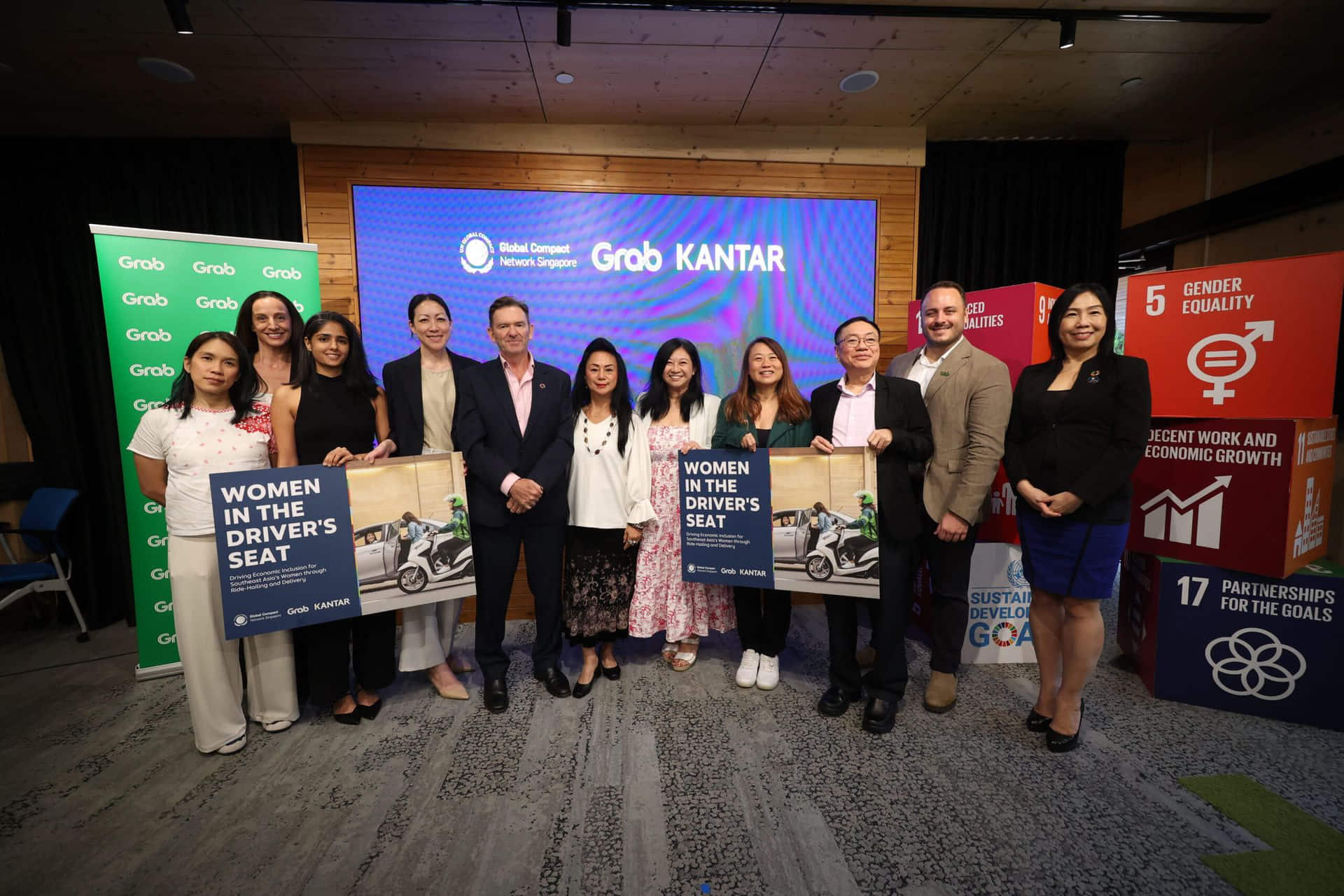
SINGAPORE – 24 March 2026 – The United Nations Global Compact Network Singapore (UNGCNS), Kantar and Grab, Southeast Asia’s leading superapp, announced the release of a comprehensive regional study: “Women in the Driver’s Seat: Driving Economic Inclusion for Southeast Asia’s Women through Ride-Hailing and Delivery”. Engaging a representative sample of 42,000 participants – including both men and women – across Indonesia, Malaysia, the Philippines, Singapore, Thailand, and Vietnam, this study examines the motivations, barriers, and transformative impact of platform work on women across the region.
Set against the backdrop of growing urgency to accelerate progress on the “Social” pillar of ESG, the study highlights how inclusive employment models – particularly those enabled by the digital economy – can play a pivotal role in closing gender gaps, strengthening labour force participation, and building more resilient, inclusive economies across Southeast Asia.
The study identifies a massive “Total Addressable Market” of over 40 million eligible and high potential women in Southeast Asia, referred to as “prospective drivers”, who are qualified and open to flexible income-generating opportunities through ride-hailing and delivery platforms. By addressing the systemic “time poverty” caused by the unequal distribution of care work – where women in the region perform over 72% of total unpaid care work – platforms are providing a vital path for women to work towards financial independence. This reinforces a broader regional priority: enabling women’s participation in the workforce is not only a matter of equity, but a strategic lever for economic growth, productivity, and long-term competitiveness.
David Fogarty, CEO of UN Global Compact Network Singapore, said, “Achieving the 2030 Agenda will require a fundamental shift in how we design work and participation in the economy. Reducing gender gaps and advancing access to decent, flexible work is central to delivering on both the Sustainable Development Goals and the ‘Social’ dimension of ESG.The Sustainable Development Goals call for an economy that delivers both gender equality and dignity in work. This research highlights how digital platforms, when designed responsibly, can help bridge long-standing gender gaps in labour force participation by enabling women to access flexible and secure income opportunities. At UN Global Compact Network Singapore, we believe that advancing gender equality and access to decent, fairly compensated work is not only a social imperative but an economic one, and will be critical to the region’s long-term resilience and competitiveness.”
Cheryl Goh, Group Head of Marketing, Sustainability, Loyalty and Support at Grab, said, “On our platform, women driver-partners generally show higher productivity levels than men, while delivering comparable ratings and even receiving higher tips. This is a strong indication of their capability to be powerful value creators for the economy, if they are able to access time autonomy. When women have the flexibility to choose when and how they work, we see ripple effects across the region, from greater financial freedom to invest in their children’s education, for example, or to have the confidence to start their own small businesses. This is why we are firmly committed to making opportunities on our platform more accessible to women, by continually removing key barriers to entry such as lack of flexibility, and safety, and ensuring that Grab remains a credible, safe and rewarding pathway for women to reclaim their economic agency and find meaningful work.”
The study’s findings demonstrate that platform work acts as a significant catalyst for narrowing the regional gender gap. By providing a viable alternative to traditional employment, platforms like Grab allow women to transform their personal economic standing while balancing their existing commitments. Through the Grab ecosystem, women are able to transform their own lives and the lives of those around them through work. Together, UNGCNS, Kantar and Grab underscore that cross-sector partnerships will be essential to scaling such models – combining responsible business practices, digital innovation, and ecosystem-wide collaboration to accelerate inclusive growth in the region.
Key Regional Insights
- Macro-Economic Value: USD 0.8 billion in economic output was generated by Grab women driver-partners across Southeast Asia in 2025. There is more economic value to unlock by driving economic inclusion for women through platform work.
- Economic Inclusion: 22% of the Grab women driver-partners report that they had no active income prior to joining platform work; this is 2.4 times higher than men, indicating that there are clear pathways for greater economic participation for women
- Flexibility: 59% of women driver-partners cite lack of flexibility as the biggest barrier to participating in traditional models of work.
- Safety: Safety is the top concern for 75% of prospective drivers. Grab has strengthened its ecosystem through platform-wide tools like AudioProtect and Selfie Verification, alongside specialised features such as “Women Passengers Preferred”, with 8 in 10 Grab women driver-partners reporting that Grab’s safety features enhance their sense of safety.
- Advocacy and Growth: 85% of women partners encourage their female friends and family to join, viewing the platform as a safe and flexible way to earn income.
- Personal Impact: 80% of women driver-partners have an improved quality of life after participating in platform work.
The full report can be found here.
The Future of Work: Redefining the Southeast Asian Economy
The conclusion of this study is clear: the gender economic gap in Southeast Asia is not a result of a lack of ambition, but a lack of structural accommodation. Advancing gender equality in the workplace could potentially add US$12 trillion to global GDP. As we look toward the 2030 Sustainable Development Goals, the Future of Work in the region must be defined by creating opportunities for women to gain time autonomy. By putting women in the driver’s seat, we are creating a ripple effect of financial resilience that will drive inclusive growth and deliver on the “Social” pillar of ESG for generations to come.